One of my favorite volunteer board members - the chair of the development committee at a university I worked for - once said to the entire board, "Remember, WE volunteer board members are the fundraisers here. The staff is hear to help us do our jobs." This resonated for me because I started out in development as a volunteer for one of the large Jewish Federations. We (the volunteers) always understood that the task of asking for gifts was OUR responsibility, and that the campaign wouldn't be successful if we didn't do our jobs. Believe me, it was difficult, and took a lot of time; and we all had day jobs, too (mine was in the real estate business.)
By the time I was working at that university, development had changed - fundraising was much more in the hands of the professional staff, with limited support from the volunteers. That trend has continued, and the large size of the development staff at some institutions is evidence of it. But that volunteer chair still understood the power of the volunteer ask!
I still believe, as he does, that the best development work is done by volunteers. When a business person asks a peer to support an organization that he or she believes in, the ask is almost always successful. When a development staff person makes a similar ask, the result is not nearly as assured. Peers asking peers still works best! Perhaps it works even better today because it is not as common.
This is not to say that development staff isn't important. I still work in development, and believe that my work in cultivating and soliciting major prospective donors is crucial to the success of the organization I work for. But I also believe that when I can get the Board Chair, or another volunteer, in the room with the prospect, it is much more likely that we will get the gift we are seeking. Sometimes it takes a volunteer just to get the phone answered or the appointment set! Someone once said that when you get the right person doing the ask for the right project at the right time, magic happens. As a professional development officer, I aspire to succeeding at that task, and really try to find the "right person", knowing that it is sometimes me, but is much more often a volunteer!
It really pains me when I hear development staff members deriding volunteers as unskilled or "adding work" to "our already busy days." I am currently volunteering myself (yes, I sometimes take a "bus man's holiday") with an organization that has a half-time development officer who wouldn't be accomplishing nearly what she does if it weren't for a small group of volunteers dedicated to the success of the organization who are doing the hard work of developing strategies, cultivating, and soliciting major donors. I have never heard her complain about a volunteer!
Volunteers are our best friends in development. If you would like some help in figuring out the best ways to work with yours, give me a call.
Showing posts with label donors. Show all posts
Wednesday, January 12, 2011
Wednesday, August 18, 2010
The Billionaires' Pledge
A lot has been written over the past couple of weeks about the request made by Warren Buffet and Bill and Melinda Gates to their peers that they each pledge to give away 50% of their fortunes before they die. Here's an article from the New York Times. Frankly, I'm not sure what this means.Many of the people quoted as having made the pledge had already made arrangements to give away most of their money, and are just now announcing it. Even Mr. Buffet concedes, “It’s not like all or half of the money represented is added money, but some of it is added.” And I suspect that much of the money being given to charity will be given to charitable foundations. That's not necessarily a bad thing - it adds to the charitable assets available - but it doesn't immediately help nonprofit organizations, and it limits the amount available to those organizations in any given year.
Perhaps the most important factor in the pledge program is that it brings the idea of charitable giving to the front pages of newspapers for a couple of weeks. If this announcement encourages just a few people to give more philanthropy than they would have before, then it has done some good. And maybe that's all we can ask.
If you would like some ideas about how you can do some good, or if you are an organization looking for help in finding new donors, give me a call.
Labels:
charitable,
donors,
major gifts,
philanthropy
Sunday, June 21, 2009
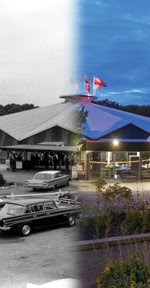
Death of a Theater
I was saddened to read this week about the closing of the North Shore Music Theater in Beverly, Massachusetts. This non-profit theater had been around for 54 years, but couldn't survive a combination of a fire, borrowing to rebuild (beyond what the insurance paid,) an apparently rocky transition of leadership, and the precipitous downturn of the economy. I don't know all the details, but what I have learned about NSMT over the past several months seems to provide some lessons for non-profit arts organizations, and other non-profits.
Full disclosure: I learned about NSMT this past fall, as I was in the midst of negotiating with them for either a consulting contract or employment as their full-time VP for Development
(it wasn't clear at the time which way they wanted to go, then became clear that neither would be possible due to their financial disaster.)
One of the stories I heard from several sources was that while NSMT has always been a non-profit theater, it didn't like to admit it! That is, under the previous administration, the theater attempted to operate on its ticket revenues (and education, etc.) alone. It really didn't want to behave like a non-profit by making a substantial effort at development. Only in the past year or so had the theater begun putting a donation envelope in all of its programs and mentioning that it depended on contributions to help fund its programs in its evening-opening announcements.
After the fire in 2005, there was apparently some fundraising done, but the loss from the fire, the shortened season, and the reconstruction was apparently more than $4 million, and this debt was never paid down by fundraising or any other means. Understand that I am not suggesting that a campaign to pay down debt would have been easy - it's never easy to fundraise to pay down debt. However, the rebuilding campaign that was held apparently did not raise nearly enough. Perhaps this is a case (I've seen this kind of behavior in other institutions) of wanting to build a certain kind of facility, and deciding to do so whether or not the money has been raised. "We can borrow the money to finish the building, and then raise the money later to pay off the debt." Too many non-profits say this, and then end up in trouble. The truth is that the board has the responsibility to either find the money to pay for the building at the time, or find the money to pay off the debt. Too many non-profit boards don't live up to their fiduciary responsibilities to oversee the staff when it comes to making realistic financial decisions, or to raise the money to fund those decisions. This is the hard work non-profit boards must do, and too often do not. North Shore Music Theater is not the only non-profit in the Greater Boston area that has had financial difficulties in the past few years because of overspending on construction projects not fully funded by donations or income.
We hear often about how important it is for non-profits to behave more like businesses. This is true especially when it comes to living within your means, but this is also one of the most difficult things for non-profits to do when it comes to fulfilling their missions. It is very hard to say "no" to mission-critical expenditures. So where does the money come from? It is the responsibility of the board to provide the funds needed to fulfill the mission of the organization. That doesn't mean board members need to give it all themselves, but if they aren't willing and able to participate fully in the process of raising the funds needed for the organization to fulfill its mission, they probably shouldn't be on the board. What this really means is working to develop relationships with potential funders (mostly individuals and families, but also including corporations and foundations) that will lead them to make gifts to the non-profit. The hardest thing for most organizations to figure out is that you can't just turn on the spigot of charitable contributions. If you haven't built relationships before you need the money, you almost certainly won't be able to raise the money when you need it! This is the sad cause of the failure of the North Shore Music Theater. The new administration had recently begun building relationships with potential funders, and there were some promising starts; but unfortunately there weren't enough potential donors ready to step in when the crisis really hit.
So we must sadly say "good-by" to the North Shore Music Theater. There are apparently still some options for rebuilding. If a buyer can be found to take over the property and lease it back. Or if an "angel" comes forward. Unfortunately, there were not enough relationships built with those who might be able to help for any of these possibilities to be very likely. Too bad.
So what's the takeaway? It's never too early to start a development program, but unfortunately it can get to be too late. People make gifts to organizations they feel connected to - especially large gifts. So they won't respond to emergency appeals if they haven't already been connected. Want to talk about ways to better connect your donors? Give me a call.
Full disclosure: I learned about NSMT this past fall, as I was in the midst of negotiating with them for either a consulting contract or employment as their full-time VP for Development
(it wasn't clear at the time which way they wanted to go, then became clear that neither would be possible due to their financial disaster.)One of the stories I heard from several sources was that while NSMT has always been a non-profit theater, it didn't like to admit it! That is, under the previous administration, the theater attempted to operate on its ticket revenues (and education, etc.) alone. It really didn't want to behave like a non-profit by making a substantial effort at development. Only in the past year or so had the theater begun putting a donation envelope in all of its programs and mentioning that it depended on contributions to help fund its programs in its evening-opening announcements.
After the fire in 2005, there was apparently some fundraising done, but the loss from the fire, the shortened season, and the reconstruction was apparently more than $4 million, and this debt was never paid down by fundraising or any other means. Understand that I am not suggesting that a campaign to pay down debt would have been easy - it's never easy to fundraise to pay down debt. However, the rebuilding campaign that was held apparently did not raise nearly enough. Perhaps this is a case (I've seen this kind of behavior in other institutions) of wanting to build a certain kind of facility, and deciding to do so whether or not the money has been raised. "We can borrow the money to finish the building, and then raise the money later to pay off the debt." Too many non-profits say this, and then end up in trouble. The truth is that the board has the responsibility to either find the money to pay for the building at the time, or find the money to pay off the debt. Too many non-profit boards don't live up to their fiduciary responsibilities to oversee the staff when it comes to making realistic financial decisions, or to raise the money to fund those decisions. This is the hard work non-profit boards must do, and too often do not. North Shore Music Theater is not the only non-profit in the Greater Boston area that has had financial difficulties in the past few years because of overspending on construction projects not fully funded by donations or income.
We hear often about how important it is for non-profits to behave more like businesses. This is true especially when it comes to living within your means, but this is also one of the most difficult things for non-profits to do when it comes to fulfilling their missions. It is very hard to say "no" to mission-critical expenditures. So where does the money come from? It is the responsibility of the board to provide the funds needed to fulfill the mission of the organization. That doesn't mean board members need to give it all themselves, but if they aren't willing and able to participate fully in the process of raising the funds needed for the organization to fulfill its mission, they probably shouldn't be on the board. What this really means is working to develop relationships with potential funders (mostly individuals and families, but also including corporations and foundations) that will lead them to make gifts to the non-profit. The hardest thing for most organizations to figure out is that you can't just turn on the spigot of charitable contributions. If you haven't built relationships before you need the money, you almost certainly won't be able to raise the money when you need it! This is the sad cause of the failure of the North Shore Music Theater. The new administration had recently begun building relationships with potential funders, and there were some promising starts; but unfortunately there weren't enough potential donors ready to step in when the crisis really hit.
So we must sadly say "good-by" to the North Shore Music Theater. There are apparently still some options for rebuilding. If a buyer can be found to take over the property and lease it back. Or if an "angel" comes forward. Unfortunately, there were not enough relationships built with those who might be able to help for any of these possibilities to be very likely. Too bad.
So what's the takeaway? It's never too early to start a development program, but unfortunately it can get to be too late. People make gifts to organizations they feel connected to - especially large gifts. So they won't respond to emergency appeals if they haven't already been connected. Want to talk about ways to better connect your donors? Give me a call.
Labels:
cultivation,
development,
donors,
fundraising,
nonprofit,
theater
Wednesday, June 17, 2009
Why are board members afraid of development?
I have had several conversations in the last couple of weeks that are variations on the same theme: Why is it so difficult to get board members of non-profit organizations to help with development work?
It seems to me there are two main reasons. First, we often don't ask. Someone once told me that the number one predictor of someone not giving to a charity is that he wasn't asked. The same holds true for action by board members. If we don't ask them to get involved in development work, they won't. Of course, you don't need to ask them directly. Try asking them to call people to thank them for their gifts. Or try asking them to host a parlor meeting at their home to cultivate some prospective donors. Once they've participated in activities like these you can tell them they've been helping with development!
This brings us to the second reason: board members are afraid of development work. Even the most sophisticated (about development) board members harbor the fear that when they are asked to help in this area it means they are going to be handed fifteen or twenty names of people they have never met and asked to solicit each of them for thousands of dollars (or more!) That's why it is so important to ask board members to participate in the kinds of activities mentioned above. And its important to be sure they understand that development really is about the cultivation process - building relationships with people so they feel more connected to the organization. People make gifts to the organizations they feel connected to, and they make large gifts to the organizations they feel most connected to. If board members are hesitant about "doing development work", just ask them to help people feel connected to your organization. When the time comes for the solicitation, they won't panic because it will seem like a natural part of the relationship building.
How can you help your board members become more comfortable with their development role? If you need some additional suggestions, please give me a call! I'd be happy to help out.
It seems to me there are two main reasons. First, we often don't ask. Someone once told me that the number one predictor of someone not giving to a charity is that he wasn't asked. The same holds true for action by board members. If we don't ask them to get involved in development work, they won't. Of course, you don't need to ask them directly. Try asking them to call people to thank them for their gifts. Or try asking them to host a parlor meeting at their home to cultivate some prospective donors. Once they've participated in activities like these you can tell them they've been helping with development!This brings us to the second reason: board members are afraid of development work. Even the most sophisticated (about development) board members harbor the fear that when they are asked to help in this area it means they are going to be handed fifteen or twenty names of people they have never met and asked to solicit each of them for thousands of dollars (or more!) That's why it is so important to ask board members to participate in the kinds of activities mentioned above. And its important to be sure they understand that development really is about the cultivation process - building relationships with people so they feel more connected to the organization. People make gifts to the organizations they feel connected to, and they make large gifts to the organizations they feel most connected to. If board members are hesitant about "doing development work", just ask them to help people feel connected to your organization. When the time comes for the solicitation, they won't panic because it will seem like a natural part of the relationship building.
How can you help your board members become more comfortable with their development role? If you need some additional suggestions, please give me a call! I'd be happy to help out.
Labels:
cultivation,
development,
donors,
nonprofit,
philanthropy
Friday, May 22, 2009
Philanthropy
What is going on in the philanthropic community these days? An article in today's Boston Globe about potential downsizing in Jewish agencies in the Greater Boston area got me to thinking. Is this just a result of the economy and Madoff, or is it a result of something more serious. Are philanthropists still giving? If giving patterns have changed, is it a short term issue, or something bigger?
This is the beginning of my thinking about philanthropy, both in the U.S. and around the world (hence PhilanthropyGlobal.) I don't have a quick answer, but I do have a sense that giving patterns have been changing, and no one seems to know quite what to do about it. Over the past five years or so, several of the Jewish federations around the country have commissioned studies (or in some cases considered studies and decided not to do them.) Most of these studies have shown that Jews are today giving more money to non-Jewish causes than to Jewish causes. This appears to be a generational issue, at least to some extent.
In my home town, the Jewish Community Center finds itself in financial difficulty. Part of the reason is said to be the economy, and part of it the opening of a brand-new YMCA across town. But what about the fact that there is nothing particularly Jewish about the JCC beyond its name? It is a health club and day care center and camp operator. What's Jewish about that? Have the local Jewish Philanthropists lost interest because they haven't been engaged? That's my guess, and it mirrors what I see at many non-profit organizations. No one can understand why giving is down, but no one is doing anything to better engage volunteers, donors, and prospective donors so they will be willing to give and give more.
Philanthropy (literally the love of mankind) has always been based on the notion that people are generous, and want to do good works. But in bad times, we all need to focus on priorities, and the job of non-profit organizations is to better engage volunteers and donors so they make the non-profit a priority. Philanthropists want to be loved, too!
If you'd like to talk about ways to make your donors feel more loved, give me a call.
This is the beginning of my thinking about philanthropy, both in the U.S. and around the world (hence PhilanthropyGlobal.) I don't have a quick answer, but I do have a sense that giving patterns have been changing, and no one seems to know quite what to do about it. Over the past five years or so, several of the Jewish federations around the country have commissioned studies (or in some cases considered studies and decided not to do them.) Most of these studies have shown that Jews are today giving more money to non-Jewish causes than to Jewish causes. This appears to be a generational issue, at least to some extent.
In my home town, the Jewish Community Center finds itself in financial difficulty. Part of the reason is said to be the economy, and part of it the opening of a brand-new YMCA across town. But what about the fact that there is nothing particularly Jewish about the JCC beyond its name? It is a health club and day care center and camp operator. What's Jewish about that? Have the local Jewish Philanthropists lost interest because they haven't been engaged? That's my guess, and it mirrors what I see at many non-profit organizations. No one can understand why giving is down, but no one is doing anything to better engage volunteers, donors, and prospective donors so they will be willing to give and give more.
Philanthropy (literally the love of mankind) has always been based on the notion that people are generous, and want to do good works. But in bad times, we all need to focus on priorities, and the job of non-profit organizations is to better engage volunteers and donors so they make the non-profit a priority. Philanthropists want to be loved, too!
If you'd like to talk about ways to make your donors feel more loved, give me a call.
Subscribe to:
Posts (Atom)

